 Entertainment Exhaustion: How Mindless Scrolling Steals Our Peace
Overview
Category
Entertainment Exhaustion: How Mindless Scrolling Steals Our Peace
 Is God a Cosmic Killjoy? Why God Has So Many Rules
 Why Our Desire for Self-Rule Fails: Trusting God's Authority
8 min read
After Babel | Why Disagreement Feels So Personal: Social Media, Identity, and the Gospel
Overview
We have more ways to communicate than any generation in history. We can respond to events as they unfold, share opinions with thousands of people, and remain connected across almost any distance. Yet we seem increasingly unable to understand one another. To understand why disagreement feels personal in modern culture, we need to examine how identity and digital communication intersect.
I enjoy watching debate content produced by channels such as Jubilee. I often learn something from their Surrounded videos, but I also leave frustrated. The people around the table speak the same language, yet they struggle to communicate in a way the other side can understand. Two people can use words like justice, freedom, or compassion while meaning very different things.
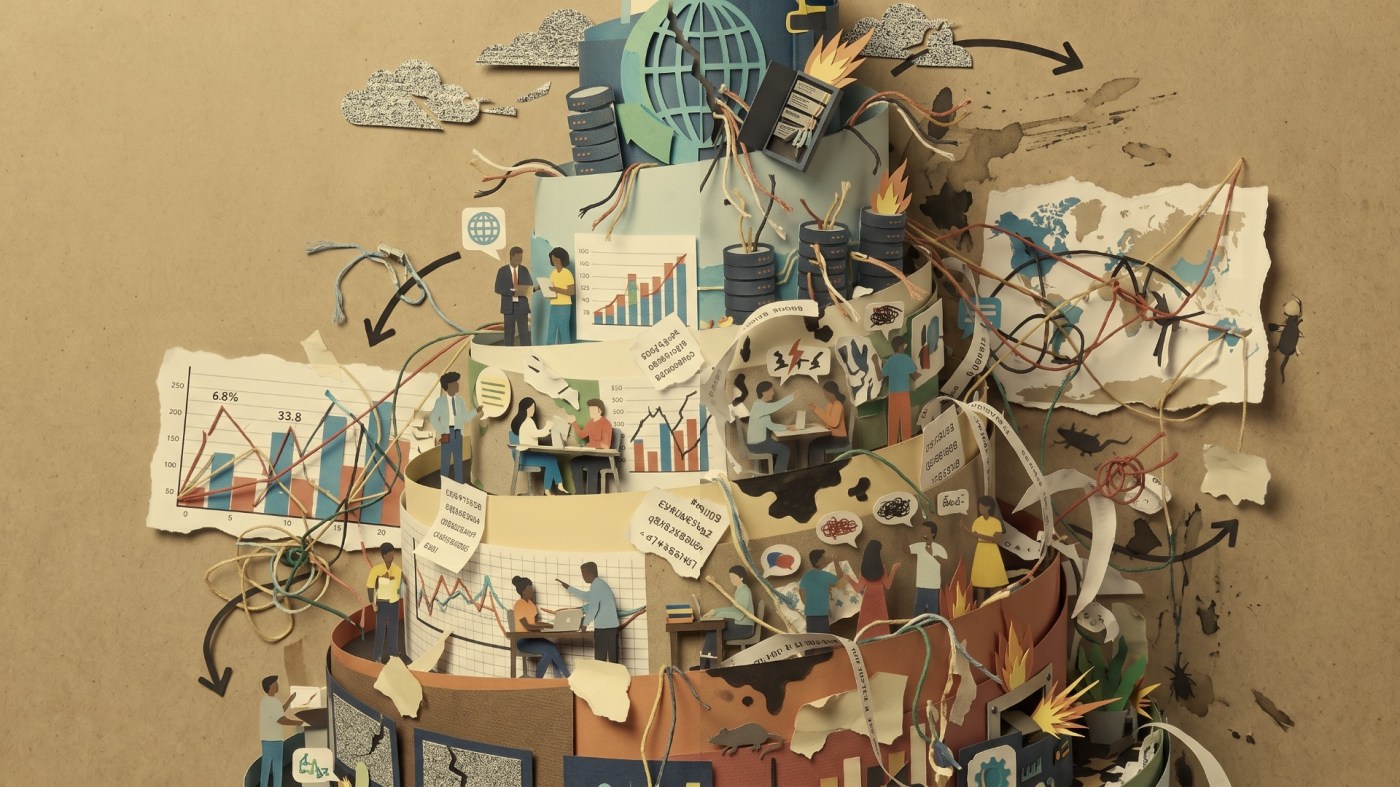
In a 2022 article for The Atlantic, social psychologist Jonathan Haidt used the Tower of Babel to describe this cultural moment. He wrote that Americans had become “unable to speak the same language or recognize the same truth.” He saw the same fragmentation spreading through institutions, communities, and families. [1]
Haidt’s image captures what polarization feels like. We speak, but we do not seem to hear. Partly because our beliefs often become tied to our sense of goodness, identity, and belonging.
When Disagreement Becomes a Threat to Identity
Imagine that a major event quickly dominates public attention. Within hours, people begin posting explanations and accusations. Friends share articles, public figures announce where they stand, and silence starts to look suspicious. In moments like these, I’ve felt the pressure to respond before I’ve had time to sit with what has happened. Maybe you have too.
This motivation stems from the urge to prove we care through public posting. Others will interpret your silence as support for the wrong side. In this example, a position or opinion about an event communicates more than simply what you believe about it. It also carries with it a telling of what kind of person you are.
A political opinion can signal to others that you are the type of good person who cares about justice. A certain stance on a social issue may reveal you are a person of compassion. A theological conviction may prove you take scripture seriously. These beliefs may be important and true, but they carry more weight than an idea. They become evidence to ourselves and others that we are good people. Beliefs begin to answer the question of who we are, and what is wrong with the world.
Once a belief carries that weight, disagreement feels personal. Because when someone questions another person’s conclusions, a lot more is tied up than a simple belief. If a belief is what helps us ground our identity, value, and belonging, and the means by which we share it with others, then when it’s criticized, we will view it as a personal attack; thus, when people enter a public debate or discussion, more than the argument is at stake. It involves one’s own sense of identity and belonging to a particular community.
How Social Media Amplifies Division
Social media amplifies this as we have the ability to not just communicate opinions to a close circle of friends we see in person, but to thousands upon thousands of people online. This dynamic illustrates how social media and division feed into online behavior. The process becomes much more visible. The accounts we follow, posts we share, and causes we support all contribute to the picture of ourselves that others see.
Haidt describes how social media shifted from helping people maintain relationships toward encouraging public performance and the management of a “personal brand.” Likes, shares, and retweets show which statements gain approval, while posts expressing anger toward an opposing group are especially likely to spread across platforms. [1]
If I post an opinion, two things happen. First, others identify me as a part of that group. Second, reinforcement from others within that group through likes or comments serves as reassurance to me that I belong. All of this reinforces our personal identity and social standing. People on the so-called other side experience the same pressure. Each group rewards loyalty and circulates the worst examples of its opponents to reinforce identity, value, and belonging. The result is that both sides become more certain of their own goodness and more suspicious of the other.
The Tower of Babel Polarization Metaphor
Not only does the Tower of Babel serve as a potent polarization metaphor, but it also provides a helpful diagnosis of how we got here. Genesis 11 describes people gathering to build a city and a tower. They explain their goal with the words, “Let us make a name for ourselves” (Genesis 11:4).
To make a name for oneself is essentially to answer life’s biggest questions on your own terms. It’s to turn from God and establish who we are, why we matter, and where we belong apart from his design. The people of Babel attempted to do this by building together and creating a community.
What the motivation behind the Tower of Babel exposes is the desire that polarization can use. We want to matter, belong, and know we stand among people who are good. And we make a name for ourselves by expressing beliefs and opinions that bring about those things. Today, our beliefs and group loyalties can become part of the name we build, while social media gives that ancient desire a public stage.
Finding Security Through an Identity Received in Christ
The Gospel offers a much more secure foundation than social media. God has revealed through Scripture that all humans are made in the image of God. This is our innate value. Thus, our worth begins with who God created us to be, rather than a reputation we wish to establish. In addition, the gospel tells us that we cannot become righteous by proving that we are on the correct side by expressing an opinion. Romans 3 says that all have sinned and fall short of the glory of God.
Every person who is associated with a political party, movement, or theological position is a person in need of grace. And no one can build a record or tower high enough to establish a true identity, sense of secure vale, or belonging as we were designed for. We cannot make ourselves righteous before God. The gospel teaches that we receive righteous through Christ.
Jesus gave his life for all. And through him, we are forgiven, welcomed into God’s family, and given a true identity we did not earn. Aligning our identity in Christ and opinions ensures our sense of worth isn’t contingent on winning arguments. This provides a secure foundation from which we can then talk about ideas with which we may disagree. When our identity and belonging is secure in Christ, it frees us to not place it in our opinions or the group by which we associate. That’s actually freeing. Because that identity is secure, I can admit when I am wrong, acknowledge failure within my own group, and listen without feeling threatened. I can call an idea false without treating the person who holds it as worthless.
A Christian Response to Political Polarization: Begin with Understanding
What can we do to address disagreement out of a secure identity? Developing a thoughtful Christian response to political polarization allows us to engage complex debates without feeling threatened. In End the Stalemate, Sean McDowell and Tim Muehlhoff recommend perspective-taking: entering another person’s point of view long enough to understand how an issue appears from where that person stands. Important to note is that trying to understand does not require an agreement with their position. [2]
I think this is to treat the other person as human and to love them. The tower of Babel reveals that we all long for answers to who we are, where we belong, and what we are worth and attempt to answer them through our own means. Yet we can’t. We were created by God to find satisfaction in him. When we understand this, it can humanize someone of a different opinion as someone seeking the same things we are.
Some people search for answers in political beliefs and have been shaped by hardship or injustice. Some people may seek answers in a particular identity to try and silence the insecurity they feel and the value they know they have.
One question can begin this process: “What has led you to see it that way?” And then allow the other person to answer without immediately preparing a response. We should also ask ourselves before we post or respond: “Am I trying to tell the truth, or am I trying to prove what kind of person I am?”
Polarization deepens when our ideas become tied to our goodness and belonging. Social media strengthens that connection by rewarding public loyalty and outrage. The gospel gives us an identity received through Christ rather than secured through victory. That allows us to hold convictions, admit when we are wrong, and listen without fear.
The church can offer a polarized world something different: a community where truth is taken seriously and people are treated with grace. That work can begin with one honest question: “What has led you to see it that way?”
Endnotes
[1] Jonathan Haidt, “Why the Past 10 Years of American Life Have Been Uniquely Stupid,” The Atlantic, April 11, 2022.
[2] Sean McDowell and Tim Muehlhoff, End the Stalemate: Move Past Cancel Culture to Meaningful Conversations (Tyndale House, 2024).
Category